Walk into any business—an office, a restaurant, a warehouse—and you’ll probably notice the obvious things first. The layout, the lighting, the people moving around doing their work.
What you won’t notice is the water.
Not because it’s unimportant. Quite the opposite.
It’s just doing its job quietly, in the background, without asking for attention.
Until something goes wrong.
The Invisible Role Water Plays in Business
Water touches more parts of a business than most people realize.
It’s in the coffee machine that starts the morning. The restrooms customers use. The cleaning processes that keep spaces presentable. In some industries, it’s even part of production itself.
And yet, it’s rarely part of the conversation.
We assume it works. We trust it to be consistent.
But when it isn’t—when there’s a taste issue, a smell, a buildup problem—it becomes noticeable very quickly.
And not in a good way.
When Small Issues Become Big Impressions
Customers don’t always know what’s wrong.
They just know something feels off.
A glass of water tastes strange. Ice has an unusual odor. Restrooms show signs of mineral buildup. Equipment doesn’t perform as smoothly as expected.
These aren’t the kinds of issues that shut down a business overnight.
But they do shape perception.
And in a competitive environment, perception matters.
The Need for Consistency, Not Just Safety
Most commercial water supplies meet safety standards.
That’s not the problem.
The challenge is consistency.
Water that tastes slightly different from day to day. Pressure that fluctuates. Mineral content that affects equipment over time.
These variations might seem minor, but in a business setting, they can add up.
That’s where commercial water systems come into play.
Not as a luxury, but as a way to create reliability.
To ensure that water behaves the same way every day, regardless of external variables.
Thinking Beyond the Basics
For many businesses, water quality becomes relevant only when there’s an issue.
But taking a proactive approach can make a significant difference.
Instead of reacting to problems, you create an environment where those problems are less likely to occur in the first place.
This is the idea behind business water purification.
It’s not about overengineering your setup.
It’s about refining it.
Making sure the water your business depends on supports your operations, rather than quietly working against them.
The Impact on Equipment and Operations
Water doesn’t just affect people—it affects machines.
Coffee makers, dishwashers, HVAC systems, manufacturing equipment—many of these rely on water in some form.
And over time, water quality can influence how well they perform.
Mineral buildup can reduce efficiency. Sediment can cause wear. Inconsistent quality can lead to unpredictable results.
These aren’t always immediate issues.
But they’re the kind that show up gradually, often when it’s least convenient.
Facilities and the Bigger Picture
When you zoom out, water becomes part of a larger system.
A facility isn’t just a collection of rooms—it’s a network of processes, all working together.
And water runs through many of them.
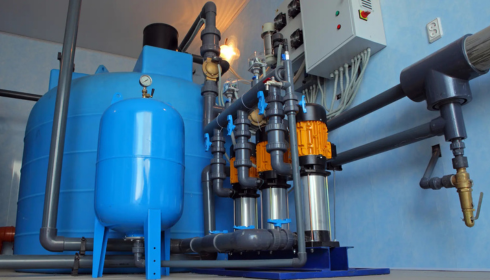
That’s why water treatment for facilities is often approached as a comprehensive solution rather than a series of small fixes.
It’s about looking at the entire environment.
Understanding how water interacts with different parts of the operation.
And making adjustments that improve the system as a whole.
The Quiet Benefits You Don’t Always See
Improving water quality in a business doesn’t usually lead to dramatic changes.
There’s no big reveal.
Instead, things just work better.
Equipment runs more efficiently. Maintenance issues become less frequent. Customers have a more consistent experience.
These improvements are subtle.
But they contribute to something larger—a smoother, more reliable operation.
And that’s what most businesses are really aiming for.
Keeping It Practical
It’s easy to get caught up in technical details when discussing water systems.
Filtration methods, chemical compositions, system configurations.
But at the end of the day, the focus should remain practical.
What does your business need?
What issues are you noticing?
What would improve your daily operations?
Answering these questions keeps the process grounded.
It turns water treatment from a complex concept into a manageable decision.
A Shift in Awareness
For many business owners, water quality becomes important only after a problem appears.
But once you start paying attention, your perspective changes.
You begin to see water not just as a utility, but as part of your business environment.
Something that influences customer experience, operational efficiency, and overall reliability.
And that awareness tends to stay.
A Thought Worth Considering
If you’ve ever noticed something slightly off about your water—whether it’s taste, smell, or performance—it’s probably worth exploring.
Not because it’s urgent.
But because small inconsistencies have a way of affecting larger systems over time.
Closing, Without Overcomplicating It
Water isn’t the first thing people think about when they walk into your business.
But it’s part of what shapes their experience.
It’s part of what keeps your operations running smoothly.
And while it may not demand attention every day, it deserves a little consideration.
Because in the end, the things that work quietly in the background are often the ones that matter most.